
The North
A Whale Watcher’s Realm: Where Deep Fjords Meet the Arctic Circle
The North keeps its own time, and we would not have it any other way. Fjords cut far inland, whales feed in the bays, and the light lingers late over water so still that the towns reflect twice. At the center of it sits Akureyri, Iceland’s northern capital, with its botanical garden, café culture, and a ski mountain rising straight above the harbor. Around it spread the whale fjords of Húsavík, the volcanic wonders of Lake Mývatn, and the herring towns of the Tröllaskagi peninsula. Come winter, the region turns into a true Nordic winter wonderland: snow down to the waterline, skiing above the town, and some of Iceland’s most reliable northern lights overhead. For travelers who want their Arctic adventures with room to breathe, this is the part of Iceland we love most, and the one we most like to send people to.
Come and Discover the North
Impressions of North Iceland
What to See and Do in North Iceland
Our top 5 reasons to visit this region
Hold Your Breath at Húsavík
Sail out onto Skjálfandi Bay on a wooden oak boat and wait. When a humpback rises alongside you, close enough to hear it exhale, the whole deck goes quiet. This is one of the most reliable places in Europe to see them, and the fishing town that grew around the bay has built its whole rhythm on that near-certainty.
Warm Water, Green Skies
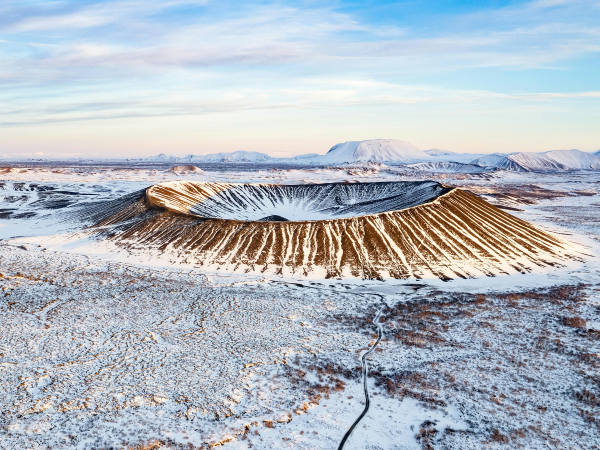
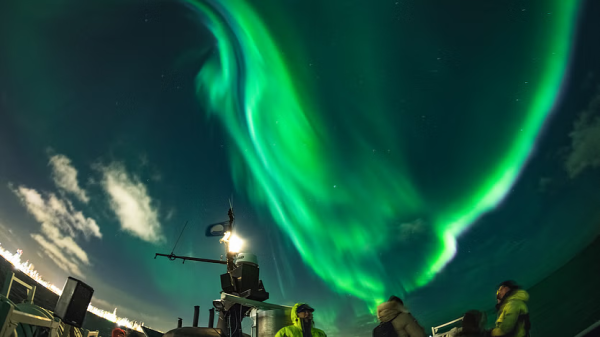
Lower yourself into mineral-blue water close to Mývatn at dusk, a steaming lava field on one side and open sky on the other. In summer the light never quite leaves; in winter there is a fair chance of the aurora overhead while you soak. Either way, the heat and the silence do the same work on a long day’s driving.
Cross the Arctic Circle on Grímsey
Ride the ferry out to the small island that sits astride the Arctic Circle, then walk across the line on your own two feet. It is the only place in Iceland where you can stand inside the Arctic, and yes, there is a certificate to prove you did.
The Silver-Rush Town
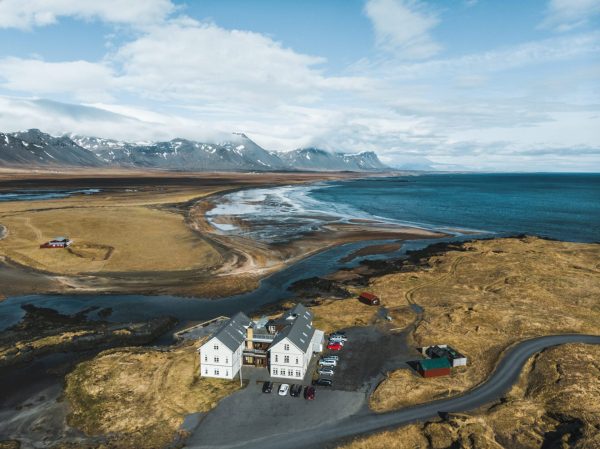
Wander the harbor town of Siglufjörður that once fed half of Europe, back when herring built fortunes here almost overnight. A museum brings those boom years back to life with salt, song, and wooden barrels, and the setting, a narrow fjord ringed by steep peaks, explains why anyone came this far north in the first place.
Discover Island Life and Turf Houses
Take the fifteen-minute ferry to Hrísey, the car-free island where 164 people live among more than forty bird species, its museum set in the old home of a 19th-century shark fisherman known as Shark-Jörundur. Back on the mainland, the turf farm at Laufás shows how Icelanders built warmth into the land itself, its 1869 wooden church still smelling of tar and old hymn books.

"We jokingly call Námaskarð the 'stinky land,' but it's one of the places I always remember. The steaming ground and strange colors make it feel more like Mars than Iceland."
Zsanett Barbara Nagy
Itineraries for Inspiration
The North rewards travelers who give it time. Our itinerary inspirations below can follow the Diamond Circle past Goðafoss, Mývatn, Dettifoss, and Ásbyrgi, then pair the region with the East Fjords or with a short domestic flight from Reykjavík, so you can experience the calmer half of Iceland without rushing the louder one.
Inspirational Itinerary Name Goes Here
Trip Name, possibly going over into two lines

Day Tour Inside the Volcano
What our travelers find useful

Flying or driving north
The flight from Reykjavík to Akureyri takes about 45 minutes; the drive takes around 5 hours (388 kilometers / 241 miles). Many of our guests fly one way and drive the other, which turns the transfer itself into sightseeing.
Winter in the North
Expect more snow than the south coast gets, reliable skiing in Hlíðarfjall above Akureyri, and long dark evenings that favor the northern lights. Winter tires and a gentle right foot are part of the deal.
Daylight hours
In late June the sun barely sets over Eyjafjörður; around Christmas, daylight shrinks to a few blue hours. Both extremes are experiences in themselves, so pick the one that matches your idea of magic.
Two sides to Dettifoss
Europe’s most powerful waterfall can be viewed from either bank, and they are entirely different trips. The east side is closer to the falls and rougher underfoot; the west has better roads and a viewing platform. Pick one, because crossing between them takes hours.
The waterfall worth the gravel
Aldeyjarfoss drops between walls of black basalt columns and sees a fraction of the visitors that Goðafoss gets. The track usually needs a 4×4, so ask us whether your rental will manage it.
Iceland stories to inform & inspire

The Best Time to Visit Iceland? Honestly, It’s Whenever You Can Go

Before or After Your Cruise, Give Iceland a Few Days of Its Own

Iceland, the Faroe Islands, Greenland: Which One Is Right for You?
Discover More of Iceland

Reykjanes Peninsula
The Reykjanes Peninsula is where your trip begins, minutes from the airport, and where the planet still looks half-finished: young lava, hissing vents, and a spot where you can stand with a foot on each of two continents.
Snæfellsnes & the West Iceland
Snæfellsnes and the West gather the whole island into one peninsula, with a glacier straight out of a Jules Verne novel, saga country, and Europe's strongest hot spring just down the road.
Capital Reykjavik
Reykjavík runs on heat from the ground small enough to cross on foot yet big on music, books, street art, and the geothermal pools where the city gathers.
The East
The East refuses to be rushed. The fjord roads take the long way around on purpose, wild reindeer graze the slopes, and towns like Seyðisfjörður tend to hold onto visitors longer than planned.

Westfjords
The Westfjords are for travelers who want Iceland at its wildest and rawest: Europe's largest bird cliff, red-gold beaches, folklore coasts, and hot tubs looking straight out to sea.
The South
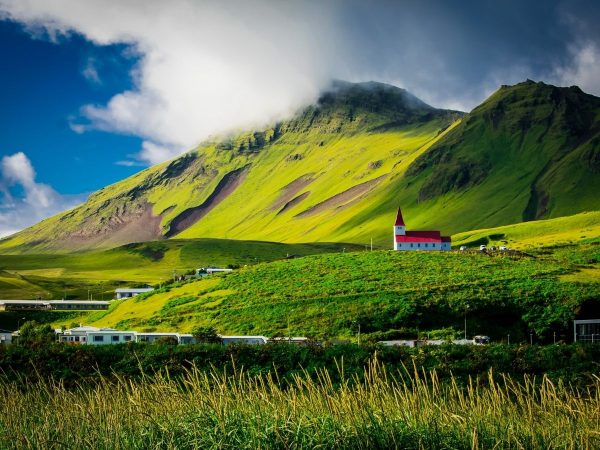
The South is the drive everyone dreams of: black beaches, glacier lagoons, a moss-walled canyon that twists toward the sea, and an ice cave you can visit even in summer, all lined up along one unforgettable coast.
Highlands
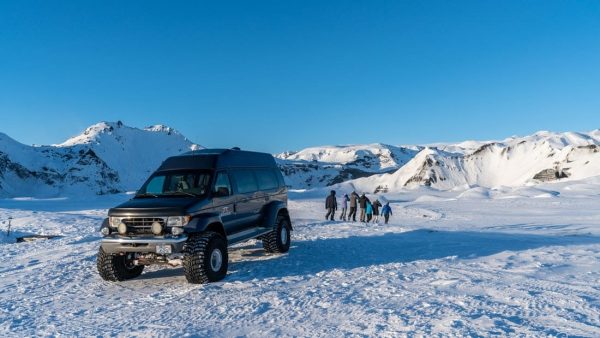
The Highlands are Iceland with nothing tamed: a volcanic interior open only in summer and reachable by 4x4 alone. Painted rhyolite peaks at Landmannalaugar, glacial rivers you ford rather than cross, and silence in every direction.